
You’ve published new pages, fixed your site speed and started building links. Now you’re refreshing Google every morning, wondering why nothing has changed. So, how long does SEO take?
The honest answer: most businesses see early movement in 3 to 6 months and meaningful SEO results in 6 to 12 months. But that range hides a lot. A local plumber and a national ecommerce store play completely different games. In this guide, the SEO team at Solomo Media breaks down a realistic SEO timeline by business type, so you know what to expect and when.
The Short Answer: How Long Does SEO Take?
For most websites, SEO takes 4 to 12 months to deliver steady, measurable growth in organic traffic and leads. Quick wins, such as fixing technical errors or improving title tags, can show results within weeks. Ranking for competitive keywords often takes a year or more.
Search engine optimization works like compound interest. Each piece of content, each earned link and each technical fix adds to the last. The first few months feel slow because you’re building the foundation. After that, growth tends to speed up rather than stay flat.
What Affects How Long SEO Takes?
No two websites start from the same place. These five factors decide whether your SEO timeline runs in months or years:
- Domain age and authority. An established site with existing backlinks ranks new pages far faster than a brand-new domain Google hasn’t learned to trust yet.
- Competition level. Ranking for “bakery in Jaipur” is a different task from ranking for “best running shoes.” The more businesses fighting for a keyword, the longer it takes.
- Technical health. Slow pages, broken links or indexing errors can stall every other effort. A technical SEO audit often reveals problems holding the whole site back.
- Content quality and volume. Sites that publish helpful, in-depth content regularly build topical authority faster than sites that post once and wait.
- Budget and consistency. SEO rewards steady effort. Six months of consistent work beats two months of intense activity followed by silence.
Realistic SEO Timeline by Business Type
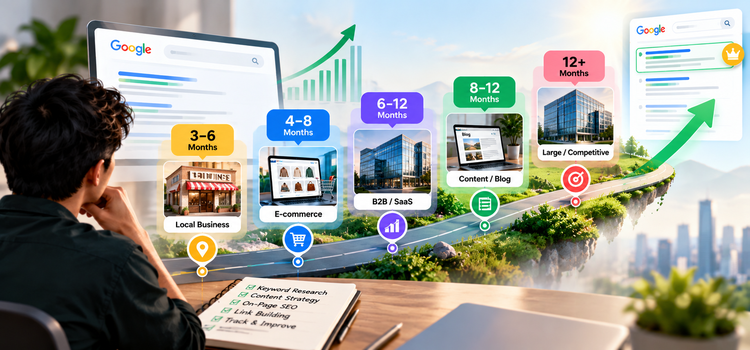
Where you start matters as much as what you do. Here’s what a realistic SEO timeline looks like for five common types of business, and why:
- Local SEO for service businesses (3–6 months): Clinics, salons, plumbers and restaurants compete within a small radius, so progress comes fastest here. A complete Google Business Profile, matching contact details across directories and a steady flow of reviews do most of the heavy lifting.
- Ecommerce SEO for online stores (6–12 months): Large catalogues bring more technical issues, duplicate content and crawl problems. Category pages usually rank first, and individual products follow as the site builds authority.
- B2B and SaaS SEO (9–18 months): Buyers research for weeks before they contact anyone. Ranking means building content that answers their questions at every stage. It takes longer, but the leads it brings are often worth far more.
- SEO for brand-new websites (12+ months): Google has no history with a new domain, so trust builds slowly. Start with long-tail keywords where competition is low, and use those early wins to grow authority.
- Established sites in competitive markets (6–12 months): Existing authority is a head start. Updating older pages and pushing keywords that already sit on page two can show gains within weeks, even if top spots for big terms take longer.
SEO Results Month by Month: What to Expect
- Months 1–2: Foundation. Technical audit, keyword research, fixing errors and optimising key pages. Google rankings may barely move, and that’s normal.
- Months 3–4: Early signals. New pages get indexed, impressions rise in Google Search Console and long-tail keywords start ranking.
- Months 5–6: Traction. Organic traffic grows noticeably. Some pages reach the first page, and enquiries or sales from search begin.
- Months 7–12: Momentum. Content and backlinks compound. Competitive keywords climb, and SEO becomes a reliable source of leads.
- Year 2 and beyond: Scale. Growth continues with less effort per result, as long as you keep publishing and maintaining the site.
Watch impressions and keyword positions in the early months, not just traffic. They move first and tell you the strategy is working.
How to Get SEO Results Faster
You can’t force Google’s hand, but you can remove the things slowing you down. These are the steps Solomo Media prioritises for clients who want faster SEO results:
- Fix technical issues first. Make sure every important page is indexed, loads quickly and works well on mobile.
- Target page-two keywords. Pages already ranking in positions 11–20 need only a small push to reach page one.
- Match search intent. Give searchers exactly what they expect, whether that’s a guide, a product list or a price.
- Use internal links. Link from your strongest pages to the ones you want to rank.
- Earn a few quality backlinks. Local news sites, industry directories and partners carry more weight than dozens of low-quality links.
- Stay consistent. Publish and update content on a regular schedule rather than in bursts.
Common SEO Mistakes That Delay Results
Many businesses wait longer than they need to because of avoidable errors. Watch out for these:
- Chasing broad keywords too early. A new site targeting “digital marketing” will struggle for years. Start with specific phrases your customers actually search.
- Publishing thin content. Short, generic pages rarely rank. Google rewards content that answers a question fully and shows real expertise.
- Ignoring mobile users. Most searches now happen on phones. A clumsy mobile experience pushes visitors away and hurts rankings.
- Buying cheap backlinks. Spammy links can trigger penalties that take months to recover from.
- Changing strategy every few weeks. SEO needs time to show results. Constantly switching direction resets the clock.
SEO vs Paid Ads: Why Organic Traffic Is Worth the Wait
Paid ads deliver traffic the day you switch them on, but that traffic stops the moment you stop paying. SEO works differently. A page that ranks well can bring visitors every day for years without a cost per click.
Organic visitors also tend to trust what they find. They chose your result because it matched their question, not because it was an ad. That trust often leads to better enquiry and conversion rates over time.
The smartest approach for many businesses is to run both. Use paid ads for quick leads while SEO builds a long-term, low-cost source of organic traffic in the background. Our guide on SEO vs PPC for small businesses compares the ROI of each in detail.
Questions to Ask Before Investing in SEO Services
Setting the right expectations at the start saves frustration later. Before you begin, get clear answers to these questions:
- What does success look like? More calls, more online sales or more demo requests? Your goal decides which keywords and pages to focus on.
- Who are you competing against? Search your main keywords and study the sites on page one. Their strength tells you how long the climb will be.
- What is the current state of your website? A technical audit shows whether you’re starting from a solid base or need repairs first.
- How will progress be reported? Agree on monthly reports covering rankings, traffic and leads, so you can see momentum before revenue follows.
- Can you commit for at least six months? SEO is a long-term investment. Stopping after two or three months usually means losing most of the groundwork.
FAQs: How Long Does SEO Take?
Can SEO show results in one month?
You can see small wins in a month, such as fixed indexing problems or better rankings for low-competition terms. Real, lasting growth in organic traffic usually needs at least three to six months of consistent work.
Why is my SEO taking so long?
Common causes include a new domain, strong competition, technical errors, thin content or too few quality backlinks. A site audit usually shows which of these is slowing you down.
Does local SEO take less time than regular SEO?
Yes, in most cases. Local businesses compete with fewer sites in a smaller area, so many see results within three to six months.
Should I stop SEO once I rank?
No. Competitors keep improving and search algorithms change. Ongoing SEO protects your rankings and keeps traffic growing.
How do I know if my SEO is working?
Track impressions, keyword rankings, organic traffic and leads in Google Search Console and Google Analytics. Rising impressions and rankings usually appear first, followed by traffic and then conversions.
Final Thoughts: How Long Does SEO Take for Your Business?
So, how long does SEO take? For a local business, expect 3 to 6 months. For ecommerce, 6 to 12. For B2B, SaaS or a brand-new website, plan for a year or more. The businesses that win are rarely the ones with the biggest budgets. They’re the ones that start early and stay consistent.
Want a timeline built for your website? With more than a decade of digital marketing experience, Solomo Media can audit your site, show you where you stand today and map out what it will take to reach page one. Contact us to get started.
